Noncompliance with laws to prevent polysubstance misuse

Noncompliance with laws to prevent polysubstance misuse

The effectiveness of statutes to combat hazardous polysubstance use (for example, alcohol and cannabis together) has rarely been evaluated. A multi-institutional team led by Klein Buendel researchers assessed compliance with a state law prohibiting recreational cannabis sales to apparently intoxicated customers in one of the first states to legalize cannabis sales. The assessment has been published in Alcohol: Clinical and Experimental Research.

In January to June 2024, pseudo-patrons visited 189 recreational cannabis stores twice in two large metropolitan areas and attempted to purchase cannabis while displaying alcohol intoxication behaviors. Observers recorded whether sellers were willing to sell the product along with characteristics of the stores (busyness, cleanliness, and signage) and cannabis sellers (sex, race and ethnicity, and age). Neighborhood characteristics by U.S. census tract were obtained (income, race, and ethnicity; population density). Sex and race and ethnicity of the pseudo-patrons, and extent and type of intoxication cues, were recorded. Descriptive statistics and logistic regression were used to describe the sales rate and predictors of the sales rate.

Assessments were completed at 173 stores. Sellers were willing to sell cannabis to pseudo-intoxicated buyers at 255 of 346 visits (73.7%). Sellers refused buyers at both visits in 6.9% of stores but in 54.3% were willing to sell at both visits. Sellers refused cannabis sales at higher rates in stores with signs saying, “no sales to intoxicated customers” (34.3%), particularly when buyers displayed more obvious signs of intoxication (39.8%).

Low compliance with the state regulation possibly occurred because sellers were unaware of the law, perceived little deterrence by the law, or lacked the skills to recognize and refuse intoxicated customers. Noncompliance with the law on selling cannabis to apparently alcohol-intoxicated customers increases the risks of polysubstance impairment and harm.

This research is supported by a grant from the National Institute on Alcohol Abuse and Alcoholism (AA031591; Dr. W. Gill Woodall and Dr. David Buller, Multiple Principal Investigators). Additional collaborating authors include Dr. Robert Saltz from the Pacific Institute for Research and Evaluation; Dr. James Fell from Fell Consulting; Dr. Gary Cutter from the University of Alabama; and Lila Martinez, Amanda Brice, and Noah Chirico from Klein Buendel.

Development of an Online Cancer Prevention Intervention for Rural Emerging Adults

Development of an Online Cancer Prevention Intervention for Rural Emerging Adults

A multi-state research team from Arizona, Colorado, New Mexico, and Utah has published research on a rural health intervention in the Journal of Medical Internet Research. The study developed and pilot tested a theory-based intervention via the web to reduce six cancer risk factors among rural emerging adults through community-engaged research.

The rapid growth of user-generated web-based health information increases the complexity of cancer information seeking. One promising strategy for promoting high-quality cancer information consumption is through targeted interventions that are intentionally designed to reach individuals in the online spaces they occupy. However, there is a paucity of evidence-based information on the best strategies for designing and implementing web-based health behavior change interventions to improve individuals’ cancer-related knowledge and prevent cancer.

This mixed methods approach describes the development of an online cancer prevention intervention aimed at rural emerging adults aged 18-26 years in the United States and delivered in Facebook private groups. The intervention was guided by behavior change theory and co-created with young adults and Stakeholder Organization Advisory Boards to ensure relevance, accessibility, and appropriateness. The paper reported on three formative surveys, a pilot intervention, protocol development, and the community-engaged process for intervention development.

The authors developed 400 posts for a Facebook feed aimed at reducing six cancer risk behaviors (unhealthy diet, lack of physical activity, tobacco use, alcohol use, sun exposure, and human papillomavirus infection) with iterative input from the emerging adults and stakeholder advisory boards. Formative surveys with rural 297 emerging adults and a pilot study of the intervention with this 26 people from this population were conducted. In the pilot study, the intervention reached a sample of participants across several rural counties, with sustained engagement over a one-month period. Key modifications to the intervention content and design emerged from both advisory boards, the formative surveys, and the pilot intervention, focusing on using perceived reliable sources and direct links to source material.

The authors concluded that this web-based cancer prevention intervention is scalable and delivers engaging, evidence-informed health information to rural emerging adults. They offered key insights into the design and implementation of web-based cancer prevention interventions for emerging adults by describing the resources, timelines, and expertise needed to design and implement the intervention. Considerations for fully engaging young people and community stakeholder partners are presented, and how their involvement resulted in modifications that strengthened the intervention was discussed. Finally, the authors highlighted the importance of theory-based health-behavior messaging, digital messaging skillsets, and platform-tailored dissemination strategies for maximizing web-based intervention acceptability.

The research is supported by a grant from the National Cancer Institute (CA268037; Dr. David Buller and Dr. Andrew Sussman, Multiple Principal Investigators). Dr. Buller is the Director of Research at Klein Buendel. Dr. Sussman is from the University of New Mexico Comprehensive Cancer Center. Other collaborating investigators are from the University of Utah, the University of Arizona, the University of Colorado, and Colorado State University. The lead author of the Journal of Medical Internet Research paper is Dr. Echo Warner from the College of Nursing and the Huntsman Cancer Institute at the University of Utah.

2025 Research Highlights

2025 Research Highlights

In 2025, Klein Buendel scientists and staff pursued rigorous behavioral science research with numerous national collaborators. Our Creative Team designed and engineered multiple web-based programs to positively impact the health and safety of people’s everyday lives. Our Research Team started three new research projects with current and new collaborators. We published 17 research papers in peer-reviewed journals, including the American Journal of Public Health, and our research was presented at four national conferences.

In February, Dr. David Buller was an invited presenter at the Policy-based Research Workshop sponsored by New York University. His presentation was entitled “Research on Implementation of Alcohol and Cannabis Sales Policies.”

In April, the Creative Team’s development of the electronic version of the STAC bystander anti-bullying intervention for middle school students was illuminated in a life-size digital graphic LUMINARY presentation of the STAC-T Program at Boise State University.

  1. “No Weigh Body Neutrality.” A Phase I SBIR award from the Eunice Kennedy Shriver National Institute of Child Health and Human Development (DK142209; Dr. Kayla Nuss, Principal Investigator, Klein Buendel). 
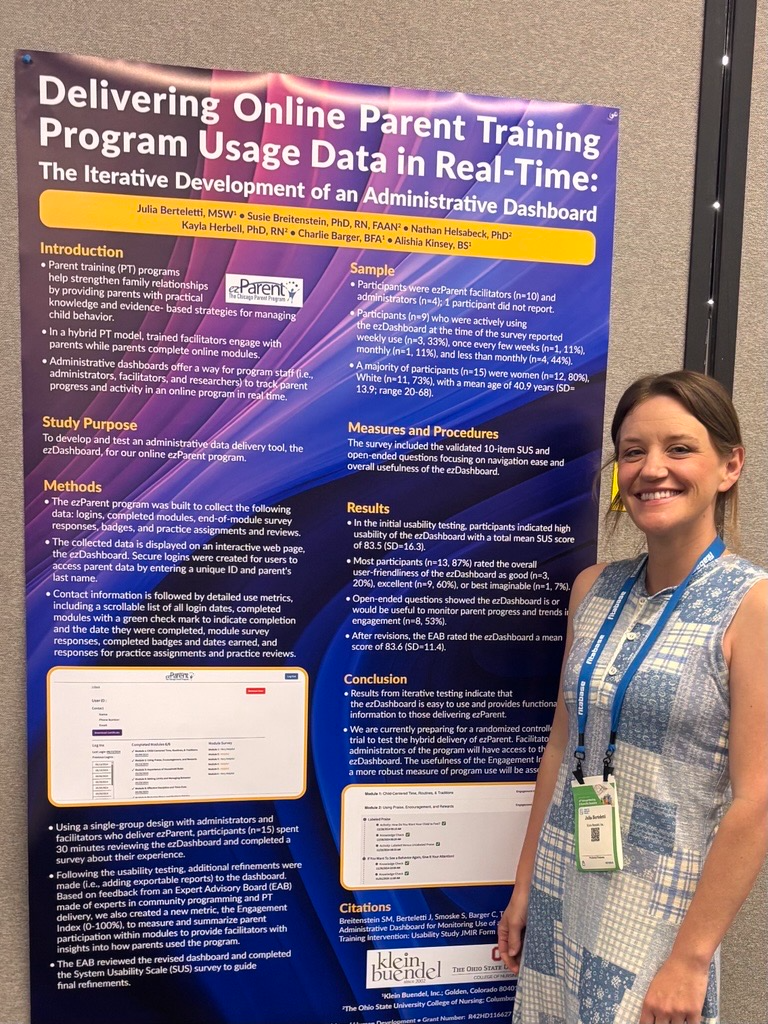
  2. The Phase II Project of “Hybrid Delivery to Increase Access and Sustainability: Evaluating ezParent Implementation.” A Fast Track STTR grant to Klein Buendel from the National Institute (HD116627; Dr. Susan Breitenstein, Principal Investigator, Ohio State University). The primary Co-Investigator from Klein Buendel is Ms. Julia Berteletti.
  3. An Administrative Supplement was awarded to “Policy and training intervention in responsible marijuana sales practices to reduce the risk of selling to intoxicated customers.” A 5-year R01 grant from the National Institute on Alcohol Abuse and Alcoholism (AA031591; Dr. W. Gill Woodall and Dr. David Buller, Multiple Principal Investigators). 
  • Dr. Anne Poirier, a nationally recognized body image expert and the author of The Body Joyful and Not a Fat Annie; and
  • Dr. Susan Breitenstein from Ohio State University; and
  • Dr. Robert Saltz from the Prevention Research Center at the Pacific Institute for Research and Evaluation.
  1. McCrady BS, Woodall WG, Berteletti J, Starling R, Martinez L, Westerberg V, Brooks M, Starke T. Developing a smartphone web app to help DWI offenders and their families. J Subst Use Addict Treat. 2025 Jan:168:209565. doi: 10.1016/j.josat.2024.209565.
  2. Heckman CJ, Mitarotondo A, Buller D, Berteletti J, Schroth KRJ, Stapleton JL, Dellavalle RP, Balk SJ, Hudson SV. Analysis of facilitators of and barriers to enactment of state regulation of indoor tanning by minors, Transl Behav Med. 2025 Jan 16;15(1):ibaf044. doi: 10.1093/ tbm/ ibaf044.
  3. Nuss K, Jones ED, Brice AN, Udovich CC, Fullmer SE, Freeberg KA, McCarty NP, Seals DR, Craighead DH. Feasibility and design of a novel smartphone app to deliver blood pressure-lowering high-resistance inspiratory muscle strength training. Mhealth. 2025 Jan;11:6. doi:10.21037/mhealth-24-33.
  4. Buller DBBerteletti J, Heckman C, Schroth KRJ, Gellar AC, Stapleton JL, Adjei A, Mitarotondo Am Guild SR, Gershenwald JE, Dellavalle D, Pagoto S. Bills to restrict access to and harm from indoor tanning facilities in US state legislatures, 1992‒2023. Am J Public Health. 2025 Feb;115(2):191-200. doi:10.2105/AJPH. 2024. 307894.
  5. Nuss K, Berteletti JWalkosz BAdjei ISmall ABeltran LSChirico N, Poirier A, Arigo D. What is in a hashtag? A comparative content analysis of fitspiration, body positivity, and body neutrality posts on Instagram. Psychol Pop Media. 2025 Feb;14(4):560-571. doi: 10.1037/ppm0000585. 
  6. Midgett A, Doumas DM, Peralta C, Peck M, Reilly B, Buller MK. Usability testing of a bystander bullying intervention for rural middle schools: Mixed methods study. JMIR Hum Factors. 2025 Feb;12: e67962. doi: 10.2196/67962. 
  7. Salafia C, Banerjee S, Hamilton JG, Schofield E, Yuelin L, Buller DB, Hunley K, Sussman AL, Guest DD, Kaphingst KA, Berwick M, Hay JL. Salafia C, Banerjee S, Hamilton JG, et al. Prospective changes in primary care patients’ family communication after skin cancer genetic test offer. PEC Innov. 2025 Jun;7:100409. doi:10.1016/j.pecinn.2025.100409.
  8. Nuss K, Brice A, Hebert C, Nauta P, Stull AJ, Swift DL, Griffith DM, Buller DB, Newton RL Jr. A culturally tailored mHealth intervention (MobileMen app) to promote physical activity in African American men: Protocol for a comparative effectiveness trial. JMIR Res Protoc. 2025 Jul;14:e67809. doi:10.2196/67809.
  9. Meenan R, Buller DB, Berteletti J, Henry KL, Buller MK, Cutter GR, Pagoto S, Adjei I, Chirico N. Economic evaluation of two scalability strategies for nationwide dissemination of an occupational sun safety intervention in a randomized trial. J Occup Environ Med. 2025; 67(7):498-506. doi: 10.1097/JOM.0000000000003390.
  10. Buller DBKinsey A, Sullivan T, Gruetter P, Morrisey-Basler MC, Buller ID, Heckman CJ. Descriptive analysis of municipal policies addressing shade in eight southwest and northeast states in the United States. Front Public Health. 2025 Jul 14:13:1565251. doi: 10.3389/fpubh.2025.1565251.  eCollection 2025. PMCID: PMC12302959.
  11. Brice ANFullmer SBarger CSerbinski JGallik M, Nauta P, Swift DL, Stull AJ, Buller DB, Griffith DM, Nuss K, Newton RL Jr. MobileMen: the development of a mobile application to promote physical activity in African American men. Mhealth. 2025 Jul 14;11:32. doi: 10.21037/mhealth-24-82. eCollection 2025. 
  12. Manne SL, Kashy DA, Pagoto S, Peterson SK, Heckman CJ, Gallo J, Berger A, Buller DB, Kulik A, Frederick S, Pesanelli M. Engagement in and correlates of total cutaneous exams and skin self-exams among young melanoma survivors and their family. J Behav Med. 2025 Oct;48(5):834-847. doi:10.1007/s10865-025-00589-4. 
  13. Woodall WGBuller DB, Zimet G, Kong AS, Reither J, Chilton L, Martinez L, Brooks M, Chirico N, Ginossar T. TeenVac.org: A mobile web app to improve human papillomavirus vaccine uptake for adolescent boys. J Adolesc Health. 2025 Oct;77(4):749-755. doi: 10.1016/j.jadohealth.2025.06.015. 
  14. Doumas DM., Midgett A, Hausheer R, Winburn A, Buller M, Perron T, Shelton J, Herbeck B. Acceptability, relevance, and short-term outcomes of the STAC-T bullying bystander app: Feasibility quantitative study. JMIR Form Res. 2025 Nov 18:9:e76830. doi: 10.2196/76830. 
  15. Saltz R, Paschall MJ, O’Hara S, Buller DB, Woodall WG, Martinez L. Mandatory responsible beverage service training in California associated with higher refusals of service to apparently intoxicated patrons. J Stud Alcohol Drugs. 2025 Nov:10.15288/jsad.25-00161. doi: 10.15288/jsad. 25-00161.

*KB investigators and staff are indicated in bold type  

Multiple presentations on research progress, procedures, analyses, and outcomes were given by Klein  Buendel scientists, staff, and their collaborators at the following national conferences: 

  • 46th Annual Meeting of the Society of Behavioral Medicine (March) 
  • 48th Annual Scientific Meeting of the Research Society on Alcohol (June) 
  • Gerontological Society of America Annual Scientific Meeting (November) 
  • 18th Annual Conference of the Science of Dissemination and Implementation in Health (December) 

Who Gives a Hoot about Heat?

Who Gives a Hoot about Heat?

Extreme heat is the leading cause of weather-related deaths. Prevention includes personal practices and emergency procedures. Behavioral interventions to improve prevention of heat-related illnesses are a priority.

Utilizing systematic review methodology, a comprehensive search strategy was deployed to identify studies reporting evaluations of behavioral heat-illness prevention interventions. Data sources included prominent bibliographic databases and relevant grey literature searches. Inclusion criteria indicated that studies that enrolled adult participants, assessed heat-related outcomes quantitatively, and were published in English from January 2000 to October 2023 be included. Data on study design, intervention features, and outcomes from the retained studies were extracted. A narrative synthesis was conducted, given the small number of studies and heterogeneous features.

Seventeen articles reporting on results from 13 studies were retained. Samples included outdoor workers, professional athletes, or community members (20,154 participants). Study quality was variable, with only two studies classified as good quality. Outcomes assessed were cognitive variables (such as knowledge, attitudes, and intentions), behaviors (such as water intake and dehydration), and clinical indicators (such as kidney function). Seven studies evaluated a health education intervention, two studies tested warning messages, and two studies focused on provision of personal protection equipment. Interventions improved self-reported heat-illness knowledge and prevention behaviors, and reduced deaths. Kidney function and health were improved in two studies. 

The published literature on behavioral heat-related illness prevention interventions was limited, despite frequent periods of high heat. The published evidence suggested that interventions can improve prevention knowledge and behavior and possibly reduce heat injury. Study designs need substantial improvement by including larger samples and randomized designs with comparison groups to avoid threats to internal and external validity in existing data. Policy efforts should be considered along with health education and provision of personal protection equipment to ensure populations are adequately protected.

This research was supported by a grant (U48DP006377) from the Centers for Disease Control and Prevention to the Emory University Prevention Research Center (Dr. Alex Morshed from Emory University and Dr. David Buller from Klein Buendel, MPIs). Additional authors on this publication include Ms. Radhika Agarwal, Dr. Shenita Peterson, Dr. Cam Escoffery, and Ms. Kayla Anderson from Emory University; and Ms. Irene Adjei, Ms. Mary Buller, and Dr. Barbara Walkosz from Klein Buendel.

B-SMART App for DWI Offenders and Family Reduced Alcohol Use and Ignition Interlock Device Lockouts

B-SMART App for DWI Offenders and Family Reduced Alcohol Use and Ignition Interlock Device Lockouts

Driving while intoxicated (DWI) remains a preventable source of morbidity and mortality in the United States. Ignition interlock devices (IIDs) are used to prevent DWI offenders from driving while intoxicated during a mandated installation period and are effective during that time. Once IIDs are removed, DWI rates are like levels of offenders who had no IID.

Researchers at Klein Buendel and the University of New Mexico have published the results of a study that tested the efficacy of a new smartphone app (B-SMART) for DWI offenders with an IID and concerned family members, with the goal of reducing IID alcohol consumption and lockout events. The full paper with methods, analyses, and results has been published in the Journal of Studies on Alcohol and Drugs.

Four B-SMART app modules were developed: 1) Life with Interlock, 2) Supporting Changes in Drinking, 3) Doing Things Together, and 4) Effective Communication. Participants (pairs of DWI offenders and concerned family members) were randomly assigned to receive the B-SMART app (n=58) or referral to a state IID information page, considered usual and customary care (n=65), and followed for nine months. IID data (failed tests and lockout events) were obtained from IID providers as the primary outcome variables. Offender and CFM reports of alcohol consumption in the last 30 days prior to assessment were secondary measures.

IID data were collected on 62% (n=76) of participants. B-SMART participants had significantly fewer lockout events than usual and customary care participants. B-SMART offenders and their concerned family members reported significantly less likelihood of DWI offender drinking at the 9-month follow-up.

Results suggest the B-SMART app reduced DWI offender alcohol consumption and IID lockout events. These outcomes are important because fewer IID lockout events predict lower DWI recidivism.

This research was supported by a grant from the National Institute on Alcohol Abuse and Alcoholism (AA022850; Dr. W. Gill Woodall, Principal Investigator). Collaborators on this paper include Dr. Barbara McCrady and Dr. Vern Westerberg from the University of New Mexico; and Julia Berteletti, Lila Martinez, Marita Brooks, and Noah Chirico from Klein Buendel; and Thomas Starke from Impact DWI. The B-SMART app was developed by the Creative Team at Klein Buendel.

Evaluation of Go Sun Smart Georgia

Evaluation of Go Sun Smart Georgia

The evaluation results of a workplace sun safety research project were presented at the 18th Annual Conference on the Science of Dissemination and Implementation in Health held December 14-17, 2025, in Washington, DC. Dr. Cam Escoffery from Emory University was the presenting author. The presentation complemented the conference theme of “Realizing the Benefits of Dissemination & Implementation Science.”

The study enrolled seven local public employers in Georgia in 2024 and randomly assigned them to intervention (3 sites) or delayed intervention (comparison) group (4 sites), stratified by government type (municipal/county) and size (≥100/<100 employees). GSSG included training of peer coaches; written audit of the employers’ sun safety policies and practices; 45-minute online employee training; and a resource website. Program materials were adapted with culturally relevant language and imagery. GSSG was delivered over a four-month period in June-October. Implementation outcomes were collected via surveys and implementation logs: GSSG delivery, worksite sun safety policy adoption or modification, skin cancer and heat illness prevention practice use and penetration, and GSSG acceptability.

Two county governments and five municipalities (3 large, 2 small) in Southwest/East Georgia participated and 48 managers and 156 outdoor workers were assessed. Compared to the comparison group, outdoor workers in the intervention worksites had higher level of information about UV and heat protective behaviors; more workers recalled receiving skin cancer and heat training; and more reported sharing sun safety information from work at home. Uptake of GSSG policy components was slow; no sites requested a policy audit, one requested a model sun safety policy. Both managers and outdoor workers rated GSSG materials highly (an average of 4.29 out of 5 stars).

The adapted GSSG was well received and improved knowledge and sharing of sun safety practices among outdoor workers. Systematic adaptation of effective interventions for novel populations is important for increasing reach and impact of evidence in sun safety interventions and addressing disparities in cancer prevention.

This research was supported by a grant (U48DP006377) from the U.S. Centers for Disease Control and Prevention to the Emory University Prevention Research Center (Dr. Alex Morshed from Emory University and Dr. David Buller from Klein Buendel, Multiple Principal Investigators). Additional authors on the poster presentation included Mary Buller, Dr. Barbara Walkosz, and Irene Adjei from Klein Buendel; and Dr. Cam Escoffery, Helen Singer, April Hermstad, and Dr. Regine Haardörfer from Emory University. 

Mandatory Training Increases Drink Refusals to Intoxicated Patrons in California

Mandatory Training Increases Drink Refusals to Intoxicated Patrons in California

Klein Buendel scientists and staff are collaborators on a study that evaluated mandatory responsible beverage service training in California and its association with higher refusals of service to apparently intoxicated patrons in drinking establishments. The study, led by Dr. Robert Saltz at the Pacific Institute for Research and Evaluation, has been published in the Journal of Studies on Alcohol and Drugs.

The California Responsible Beverage Service (RBS) Training Act mandated training for all alcohol servers by 2023, giving this multi-institutional research team a rare opportunity to see how a statewide initiative might influence server behavior.

In 2022, 300 licensed on-premises establishments were sampled in nine counties in and around the San Francisco Bay Area. From July 2022 to January 2023, pseudo-patron and observer teams visited each establishment, and pseudo-patrons attempted to buy alcohol while displaying obvious signs of intoxication. The outcome of each purchase attempt and characteristics of establishments, servers, and pseudo-patrons, and month, day, and time, were recorded. In 2024, the same premises were visited as a follow up.

At baseline, 19.6% of the outlets refused service to the pseudo-patron. At follow up, the refusal rate increased significantly to 39.2% in a regression model controlling for establishment, server, and pseudo-patron characteristics. A typology of establishments (such as sports bar, casual restaurant, fine dining restaurant) did not show any association with refusal rate except that fine dining places refused more often than other types of establishments. Observers’ ratings of how obvious the pseudo-patron’s apparent intoxication was strongly associated with refusals.

The researchers conclude that there was substantial improvement in alcohol over-service refusals two years after the California mandatory RBS training law went into effect.

This research was funded by a grant to PIRE from the National Institute on Alcohol Abuse and Alcoholism (AA028772; Dr. Robert Saltz, Principal Investigator).  Co-authors include Dr. Mallie Paschall and Dr. Sharon O’Hara from PIRE; and Dr. W. Gill Woodall, Dr. David Buller, and Ms. Lila Martinez from Klein Buendel.  

Feasibility of the STAC-T Bullying Bystander App

Feasibility of the STAC-T Bullying Bystander App

STAC-T, which included a 40-minute training and a 15-minute booster session, was completed by 249 middle school students recruited from six middle schools in rural, low-income communities in the United States. Students completed a post-training survey assessing program acceptability and relevance, whether they witnessed bullying post-training, and the use of the STAC strategies to intervene in bullying situations. Descriptive statistics were used to assess acceptability, relevance, and the use of STAC strategies. Linear regression analysis was used to assess the relationship of program acceptability and relevance to STAC strategy use.

Most students reported the program was acceptable (82.1 to 90.0%) and relevant (78.6 to 83.0%) for students at their school; 88.8% (111) of the 50.2% (125) of students who witnessed bullying post-training also reported the use of at least one STAC strategy to intervene when witnessing bullying. Program relevance was a significant predictor of post-training use of STAC strategies. In contrast, program acceptability was not a significant predictor of post-training STAC strategy use.

This study provides support for the acceptability and relevance of STAC-T, as well as the effectiveness in promoting the use of the STAC strategies to intervene in bullying situations. Further, program relevance was related to STAC strategy use, highlighting the importance of assessing program relevance for specific student populations.  

The multi-institutional team was led by Dr. Aida Midgett from Boise State University. Collaborators included Dr. Diana Doumas, Taylor Perron, and Jennalyn Shelton from Boise State University; Dr. Robin Hausheer from the University of Vermont; Dr. Amanda Winburn from the University of Mississippi; and Brandon Herbeck and Mary Buller from Klein Buendel. The research was supported by a grant to Klein Buendel from the National Institute on Minority Health and Health Disparities (R42MD014943; Dr. Aida Midgett, Principal Investigator).

Just Care Simulated Usability Testing

Just Care Simulated Usability Testing

Growing numbers of people will grow old and die while incarcerated. A team from The Penn State University Ross and Carol Nese College of Nursing and Klein Buendel participated in a panel presentation at the Gerontology Society of America Annual Scientific Meeting on November 12-15 in Boston, MA, to discuss their research on caring for the aged and dying in prison.

The panelist, Dr. Erin Kitt-Lewis from Penn State, presented a pragmatic approach to the usability testing of Just Care. Just Care is a 7-module digital program to train people living in prison to assist staff by providing care to their peers who are older or dying. The web-based program educates prison staff on the needs of chronically ill, aging, and dying people who are incarcerated and provides implementation tools for providing care. Research evidence supports using peer caregivers to assist staff with geriatric and end-of-life care.

This research was funded by an STTR grant to Klein Buendel from the National Institute on Aging (AG057239; Dr. Susan Loeb from Penn State and Dr. Barbara Walkosz from Klein Buendel, Multiple Principal Investigators). Additional collaborators include Dr. Erin Kitt-Lewis, Dr. Kalei Crimi, and Nawal Alsearhi from the Ross and Carol Nese College of Nursing at Penn State University; and Amanda Brice and Steve Fullmer from Klein Buendel.

Helps and hindrances to passing state indoor tanning laws

Helps and hindrances to passing state indoor tanning laws

Indoor tanning causes skin cancers, including potentially deadly melanoma. Indoor tanning often starts during youth, a critical time for deleterious skin damage. About half of U.S. states have enacted laws banning indoor tanning for minors under the age of 18. A multi-institutional team of researchers including Dr. David Buller and Julia Berteletti from Klein Buendel has published a paper in Translational Behavioral Medicine that reports qualitative findings from interviews with key informants involved in indoor tanning legislative efforts to identify/describe factors influencing law enactment, based on the Multiple Streams Framework (1).

Guided by expert advisors and using snowball-sampling, 64 key informants from 16 states with most recently enacted indoor tanning laws regulating minor access and states without restrictions were contacted. In virtual interviews, key informants shared their unique “story” of indoor tanning bill efforts, enactment, implementation, impact, and potential future directions, which were transcribed and qualitatively coded by trained staff.

Although key informant roles (legislators, advocates, clinicians, and melanoma survivors) and legislative processes vary by state, similar facilitators and barriers to indoor tanning bill passage were identified: personal stories, advocacy, opposition, preparation, legislator education, economic/ enforcement issues, bill stringency, political values/partisanship, and legislative process. Other factors influencing bill enaction included failed U.S. Food and Drug Administration attempts toward federally banning minor indoor tanning and competing priorities.

Despite evidence of laws’ impact on minors’ indoor tanning, policy enaction is challenging and slow. Understanding key facilitators and barriers may help advocates to advance legislation efforts. Advocating for stringent laws necessitates consideration of potential downstream effects. For example, even with policy enactment, key informants believed enforcement and compliance were likely insufficient and variable, with minors continuing to indoor tan, putting them at risk for potentially deadly skin cancer.

This research was supported by a grant to Rutgers University from the National Cancer Institute (CA244370; Dr. Carolyn Heckman and Dr. David Buller, Multiple Principal Investigators). Authors include Dr. Carolyn Heckman, Ms. Anna Mitarotondo, Mr. Kevin Schroth, and Dr. Shawna Hudson from Rutgers University; Dr. Jerod Stapleton from the University of Kentucky; Dr. Robert Dellavalle from the University of Minnesota; Dr. Sophie Balk from the Albert Einstein College of Medicine; and Dr. David Buller and Ms. Julia Berteletti from Klein Buendel.

References

  1. Kingdon JW. Agendas, Alternatives, and Public Policies. Longman, 2003.